
The best founder visa may not be the one that sounds most entrepreneurial. A startup immigration lawyer in Silicon Valley can assess whether an H-1B, L-1, or O-1A better fits your role, company structure, and immigration record. The right route depends on the facts of your case, and a green card strategy may be part of the plan from the outset.
For foreign-born founders, choosing a visa can affect how you work in the United States and how your company grows. This guide outlines relevant visa options, the issues an attorney may review, and how to understand the scope of legal services. It also covers employment-based green card pathways, including options for multinational executives and people whose work may qualify for other employment categories. Use it as a starting point to identify the questions to address before moving forward.
Key Takeaways
- Explore how founder roles, company structure, and business plans can shape the fit of options such as E-2, H-1B, L-1, and O-1A visas.
- Learn what attorney-led review examines and why approval rates alone don’t show whether a visa strategy fits your circumstances.
- See how employment-based green card pathways differ, and which founder or executive profiles may be relevant to each.
- Understand how a law office’s Silicon Valley location can factor into working through a startup immigration matter.
- Get a clearer picture of how legal review and flat-fee scope can help define the work involved in a founder’s immigration plan.
What are the best visa options for foreign-born startup founders in San Francisco?
Visa options depend on the founder’s role, company structure, and work plans. The relevant categories can include investor, researcher, intracompany transfer, and employment-based visas.
Founder Visa Pathways
E-2 treaty investor visas may be relevant when a founder’s plans involve investing in a U.S. business. Case review considers the founder’s proposed role, available capital, and business plans. J-1 visas may suit some researchers or entrepreneurs whose activities fit an exchange program. L-1 intracompany transferee visas can support managers and executives moving from a related foreign company to a U.S. operation.
An L-1 applicant must have worked for the foreign company for at least one of the previous three years. For an L-1A new-office petition, U.S. Citizenship and Immigration Services says the intended U.S. office must support an executive or managerial position within one year of approval.
Employment-based visas can also support startup hiring. An H-1B may be relevant for a professional in a specialty occupation, while TN visas are options for eligible Canadian and Mexican citizens. The company’s role, the employee’s qualifications, and the intended work help determine which category to assess.
O-1A and Entrepreneur Rule Applications
An O-1A may suit a founder able to demonstrate extraordinary ability in their field. It has no numerical cap, but the petition depends on evidence supporting the founder’s achievements and distinction. The International Entrepreneur Rule is a separate pathway to assess based on the founder’s role, startup, and supporting evidence. Application costs depend on filing needs and legal work; there is no single total for every case.
O-1A eligibility: A founder must present evidence of extraordinary ability in their field. The case review connects that record to the proposed work and assesses whether the evidence supports the petition.
International Entrepreneur Rule requirements and costs: An application involves reviewing the founder’s role, the startup, and evidence relevant to the rule’s criteria. The legal work and filing needs shape the application’s scope. Ask what work is included in the proposed representation and what is handled separately.
Documents attorneys review: Immigration attorneys may examine company formation and ownership records, business plans, investment documents, and descriptions of the founder’s role. For an L-1 case, they also review evidence of the relationship between the foreign company and U.S. operation.
Timing and premium processing: Processing time depends on the visa category, filing route, and petition preparation. Premium processing may be available for some petition types; eligibility depends on the category. H-1B cap-subject petitions also require registration months before the benefit period begins.
Founder ownership and work risks: A startup can sponsor an H-1B petition for its majority owner, provided the petition meets U.S. Citizenship and Immigration Services requirements. Ownership alone does not establish eligibility; the petition must support the founder’s role and employment arrangement. An attorney-led review can identify how company control and job duties affect the case.
Approval rates and attorney-led review
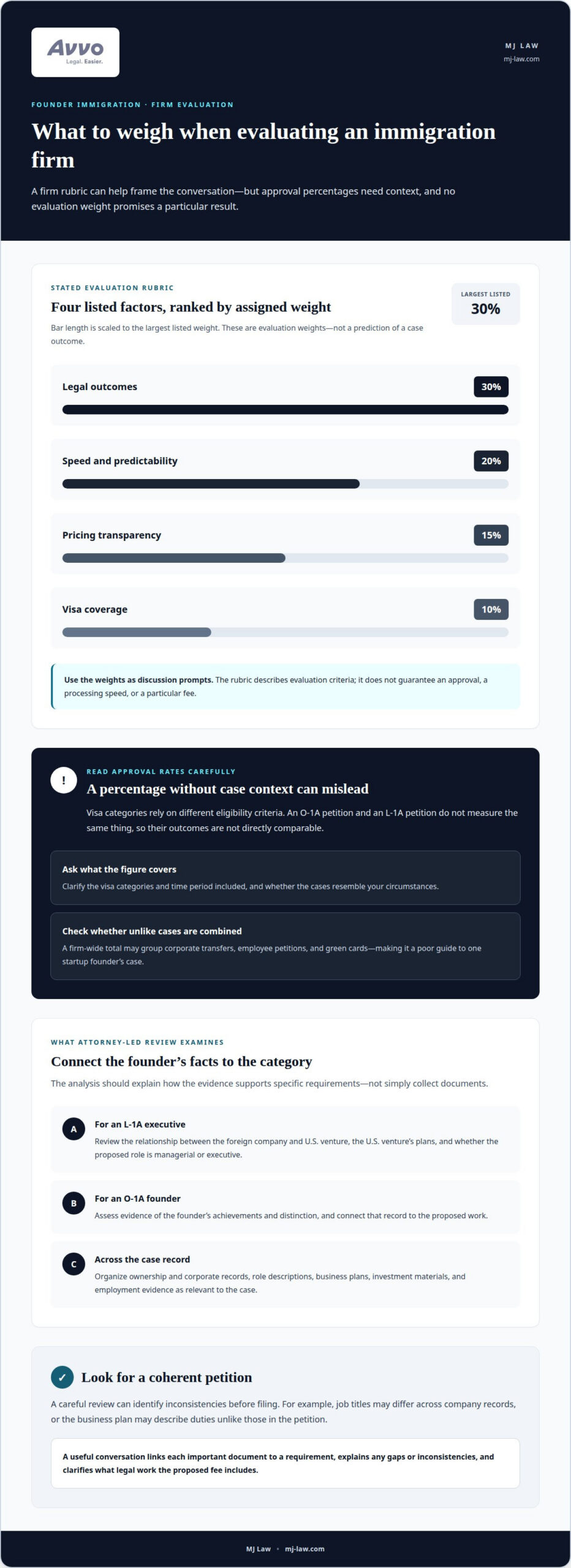
An approval rate can look precise while hiding important differences between cases. A founder’s visa category, evidence, company structure, and filing history all shape how a petition is assessed. Compare like with like: an O-1A petition and an L-1A petition rely on different eligibility criteria, so their outcomes do not measure the same thing.
A useful review starts by matching the founder’s facts to the chosen category. For an executive seeking an L-1A, attorneys examine the foreign company relationship, the U.S. venture’s plans, and whether the proposed role is managerial or executive. For an O-1A, the focus shifts to evidence of the founder’s achievements and distinction. The legal analysis should explain why each document supports a specific requirement.
Approval percentages need context before they can inform a decision. Ask which visa categories and time period a figure covers, and whether it reflects cases similar to yours. A firm’s overall total might combine corporate transfers, employee petitions, and green cards, making it a poor guide to a startup founder’s individual circumstances.
An attorney-led review should connect your background with the company’s records. It may involve organizing ownership documents, corporate records, role descriptions, business plans, investment materials, and employment evidence. The attorney can then identify inconsistencies, such as differing job titles across company records or a business plan that describes duties unlike those in the petition. Addressing these issues before filing helps present a coherent case.
Firm evaluation rubrics can also clarify what quality means beyond approval. One rubric assigns 30% to legal outcomes and 20% to speed and predictability. It gives 15% to pricing transparency and 10% to visa coverage. These are evaluation weights, not a promise of any result. Use them to frame a discussion about the firm’s review process, communication, and experience with the relevant category.
The fee structure is another important part of the discussion. A flat fee should specify the legal work it covers, such as case assessment, petition preparation, and responses to agency requests if included in the agreement. The written scope matters because a founder’s case may involve both personal immigration evidence and corporate records. Fees should reflect the agreed work, not an assumed approval.
Before choosing representation, clarify who leads the legal analysis, how evidence gaps are handled, and what updates the process includes. A focused consultation about your startup visa case can help identify which facts deserve closer review.
Green card applications
A founder’s green card strategy depends on qualifications, work history, and the company’s role. According to U.S. Citizenship and Immigration Services, at least 140,000 employment-based green cards are offered to qualified foreign-born workers in the United States annually. That figure covers multiple employment categories, so the relevant question is which category matches the founder or employee.
For a founder with extraordinary ability, EB-1A may be relevant. EB-1B covers outstanding professors and researchers. EB-1C is intended for multinational managers and executives employed abroad to establish or develop a U.S. office. A founder already working through an L-1A visa may consider whether the EB-1C route fits their multinational role and company structure. An L-1A does not itself grant permanent residence.
Other possibilities include EB-2 and EB-3. EB-2 may fit people with an advanced degree or exceptional ability. EB-3 covers skilled workers, professionals, and other workers. For an entrepreneur whose proposed work may serve the national interest, EB-2 NIW may be worth assessing. It waives the labor certification requirement for applicants who qualify for the waiver.
A business plan can explain a founder’s objectives in an EB-2 NIW petition, but USCIS says independent evidence should support the plan. For example, the petition’s explanation of a proposed venture should connect to evidence of the founder’s work and the endeavor’s aims. The plan is one part of the case, not a substitute for evidence supporting eligibility.
Attorney-led preparation connects the selected category to the founder’s record. For an EB-1C case, review may focus on the relationship between the foreign and U.S. entities, the executive or managerial role, and the company’s plans. For an EB-2 NIW petition, the analysis centers on the proposed endeavor and evidence supporting the waiver request. An employee’s case may instead depend on their professional qualifications and the appropriate employment category.
Before moving forward, an immigration attorney can map the proposed green card category against the founder’s current status and business plans. This helps identify evidence gaps and keep company records consistent with the petition. A San Francisco startup founder with a multinational company, for instance, may need a different document strategy than an employee pursuing EB-3. The category determines the evidence and the case’s central argument.
Silicon Valley immigration law office location
An immigration law firm’s location affects meeting logistics, not the legal criteria for a visa. For foreign entrepreneurs, the practical question is whether the office’s location supports clear communication and organized case preparation. A founder based in San Francisco may weigh travel differently from a company operating near Cupertino. Neither location changes the evidence needed for an O-1A, L-1, or investor petition.
Directions from Stanford to the office specify driving 3.6 miles on I-280 South before exiting at N Wolfe Road in Cupertino. That route gives Stanford-based founders a concrete reference point for planning an in-person visit. It also helps a company coordinate attendance when a founder, executive, and business partners work from different parts of Silicon Valley.
Location is most relevant when a meeting involves several people or company records. For example, an executive and a corporate representative may need to discuss how their documents describe the founder’s role. Plan the meeting so participants can bring relevant records and address questions together. Before traveling, identify a specific purpose, such as clarifying the company structure or discussing evidence for an extraordinary ability case.
For founders outside the immediate area, location can affect how legal discussions fit around business commitments. An entrepreneur visiting Silicon Valley for investor or partner meetings may schedule an immigration consultation during the same trip. Keep the legal discussion focused on immigration needs, separate from fundraising or commercial negotiations.
A firm’s location alone does not show whether its attorneys understand startup matters. Look for a clear explanation of how your responsibilities relate to company records, what evidence a petition needs, and what steps come next. In an initial discussion, explain the venture’s structure, your proposed U.S. role, and any international company relationship. Those details make the conversation more useful than a general location inquiry.
Consider travel alongside the legal issues in your case. A San Francisco founder may prioritize convenient scheduling, while a Cupertino executive may value proximity for discussions with corporate representatives. For an extraordinary ability case, the central preparation remains the evidence and petition strategy, not the office address. Location is one practical factor in deciding how to work with counsel.
Before an in-person meeting, set an agenda and identify who needs to attend. Organize relevant records, such as company documents or a role description. If participants are joining from different locations, agree on the format and attendees in advance. These steps keep the discussion focused on your immigration needs and the company’s plans.
Which Silicon Valley immigration lawyers specialize in startup founders and entrepreneurs?
A startup immigration lawyer in Silicon Valley should connect your immigration goals with your startup’s structure and work plans. Look for counsel who can review founder and employee petitions, company records, and longer-term green card planning. Experience is more than a label: the attorney should explain how the evidence supports the visa category relevant to your case.
Start with the work involved in your case. An L-1 matter may require analysis of the relationship between a foreign company and its U.S. operation. An O-1A case centers on evidence of extraordinary ability. An H-1B petition involving a founder-owner raises questions about the role and the employer-employee relationship. Ask how the attorney will analyze the facts that distinguish your situation.
Examine the review process, too. A clear process identifies the records needed, who will conduct the legal analysis, and how the petition’s claims will align with company documents. For example, your job title, duties, and ownership information should be consistent across the case materials. The lawyer should explain the purpose of each type of evidence in plain language.
Scope and communication matter as well. Before representation begins, the engagement terms should describe the legal work included, how questions are handled, and what happens if the case requires additional work. If the proposed fee is flat, read its scope carefully. Preparation, filing, and responses to government requests may be treated differently in the agreement. The written terms should make these distinctions clear.
Consider the company’s plans alongside your immediate visa needs. A startup hiring its first specialist may need an employee petition, while the founder may need a separate strategy. Discussing the founder’s status, the company’s hiring plans, and possible green card pathways can help organize related decisions. Each worker and founder needs an assessment based on their own circumstances.
Prepare for an initial legal discussion by organizing the basics: your current status, the company’s ownership and operations, your intended U.S. role, and any connections to a foreign company. These details help counsel identify questions that affect the case strategy. For a San Francisco startup, a focused review can clarify whether your needs and the company’s hiring needs belong in one plan or separate petitions.
Choose counsel based on the quality of the legal analysis, transparent scope, and relevant case planning, rather than a headline approval percentage alone. To discuss the founder’s immigration strategy and next steps, schedule a startup immigration consultation.
MJ Law: Family Immigration Services
MJ Law assists individuals and families with immigration matters, including Family Immigration Services and marriage-based green cards. The firm also handles Business and Investor Visas and Employment-Based Visas, which may be relevant to a founder’s or employee’s U.S. immigration plans. Entertainment and Artist Visas are another area of its practice.
Turn to MJ Law for legal guidance on a business or investor visa, an employment-based matter, or a family immigration application connected to your plans in the United States. A focused conversation can clarify which immigration matter fits your needs and what steps to address next.
Contact MJ Law to discuss your immigration needs.
Plan Your Next Immigration Step
Your next decision can shape both your role in the United States and your company’s plans. Consider how your current immigration position, intended work, and startup structure fit together. A startup immigration lawyer in Silicon Valley can help organize those details into a legal strategy with clear priorities and a defined scope of work.
MJ Law handles Business and Investor Visas and Employment-Based Visas for business-related immigration matters, as well as Family Immigration Services. This range can be useful when a founder’s plans involve both a startup petition and a family immigration matter. Start with a focused conversation about the issue you need to address and the relevant records.
Contact MJ Law about your startup visa to discuss your circumstances and possible next steps. A careful plan can help you approach the immigration process with greater clarity and move ahead with confidence.
Frequently Asked Questions
What Is Startup Immigration Law and Who Does It Serve?
Startup immigration law covers visa and green card matters connected to a new or growing business. It may involve founders, co-founders, investors, and companies hiring foreign-born employees. For example, a founder planning to work in the United States while recruiting an international engineering team may need both an individual visa strategy and a hiring plan. Legal review connects the proposed work to the company’s ownership, operations, and supporting records.
Can an early-stage startup with no employees sponsor an H-1B visa?
Yes. A startup with no employees can sponsor an H-1B petition for its first employee or even its majority owner, provided the petition meets U.S. Citizenship and Immigration Services requirements. The company’s early stage alone doesn’t rule out sponsorship. The petition still needs to support the proposed employment arrangement and the worker’s eligibility. For a founder-owner, the ownership structure and role in the company are important parts of the case analysis.
How should founders evaluate immigration counsel?
Evaluate counsel by how clearly they explain the legal strategy, evidence needs, representation scope, and communication process. A useful first discussion should cover your current status, intended role, company structure, and hiring plans. Notice whether the attorney connects those details to a specific visa category instead of giving a generic answer. Review the engagement terms to understand what the fee covers and how additional work is handled.
Why do Bay Area tech founders need a specialized immigration attorney?
Tech founders often combine company ownership, hands-on work, fundraising, and hiring, creating distinct immigration questions. An attorney familiar with startup matters can analyze how your duties and the company’s structure appear across the petition and corporate records. For example, if you also lead product development, the proposed role should be explained consistently. A focused review connects your immigration case with the startup’s practical plans.
What are the best visa options for startup founders in the United States?
The best option depends on the founder’s background, company structure, and intended U.S. work. H-1B, L-1, O-1A, and E-2 visas may be relevant in different situations; J-1 programs may also fit some researchers or entrepreneurs. A founder with a foreign company may assess an L-1, while evidence of extraordinary ability can make O-1A relevant. The decision starts with matching eligibility and evidence to the founder’s actual role.
Can startup founders qualify for an EB-2 NIW or EB-1A green card?
Potentially, if the founder’s qualifications and evidence fit the category’s criteria. EB-1A is for people with extraordinary ability, while EB-2 NIW may suit an applicant whose proposed work supports a national interest waiver request. A business plan can describe the founder’s objectives, but U.S. Citizenship and Immigration Services says independent evidence should support it. The petition should connect the founder’s record to the specific category sought.
How much do Silicon Valley startup immigration lawyers charge for consultations and visa applications?
Legal fees depend on the case and are provided after a quote request. Cost factors include the visa or green card category, the complexity of the facts, the evidence requiring review, and the legal work included in the engagement. Consultation terms can also vary. Before retaining counsel, clarify what the quoted scope covers, whether petition preparation is included, and how work outside that scope is handled.
How do startup immigration lawyers compare by experience, reviews, and success rates?
Compare relevant case experience, review patterns, and how clearly each lawyer explains the limits of approval statistics. A firm’s overall outcomes may combine different visa types, so they may not predict results for a founder’s specific case. MJ Law reports more than 400 five-star Google reviews and a 4.8 rating. Those reviews can inform a comparison, alongside the lawyer’s proposed strategy and communication approach for your case.